Jio 3kW Solar Panel System 2026: Residential electricity users are now focusing on real daily solar power generation, high subsidy benefit, and long-term electricity bill reduction instead of only panel capacity numbers, and this rooftop solar positioning directly targets middle-class households, small shop owners, and independent house owners. With grid electricity prices rising in many states, rooftop solar systems are becoming strong long-term cost saving power solutions.
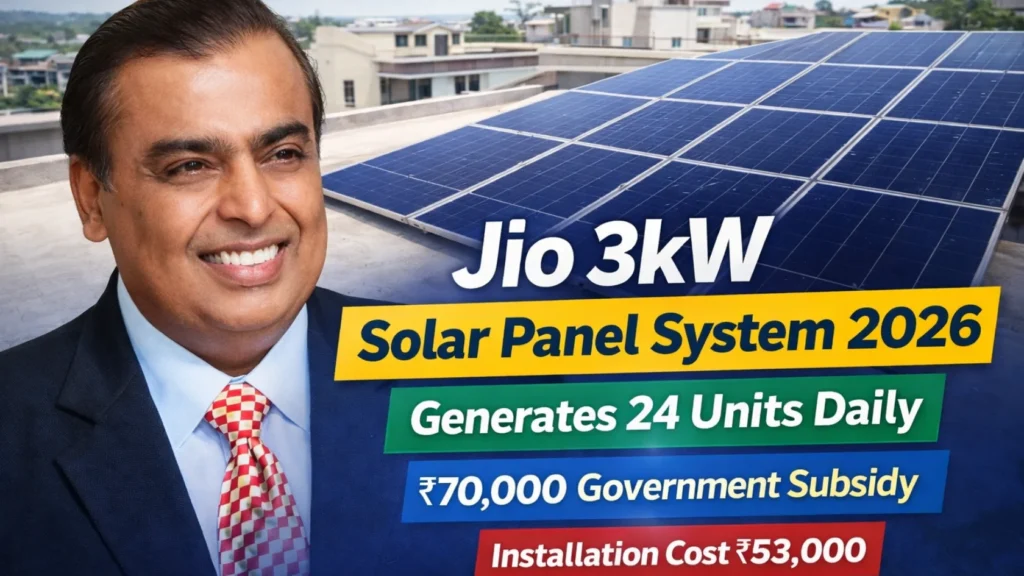
System Configuration And Rooftop Installation Setup
Jio 3kW rooftop solar system comes with high efficiency solar panels, grid-tied inverter, mounting structure, DC wiring, AC distribution unit, and full electrical safety protection system. Required shadow-free roof space stays around 250–320 square feet. System supports net metering integration where state electricity policy allows export of extra solar units to the electricity grid.
Daily Power Generation And Output Performance
System generates around 20–24 units of electricity daily under strong sunlight conditions. Monthly generation stays around 600–720 units depending on season and sunlight exposure. Annual generation stays around 7,200 to 8,200 units class depending on location and weather pattern.
Electricity Bill Saving And Usage Impact
Monthly electricity bill saving stays around ₹4,500 to ₹6,000 depending on electricity tariff and home load usage pattern. Homes using AC, washing machine, and water heater during daytime gain maximum solar usage benefit. Net metering further reduces electricity bill if extra units are exported to grid.
Government Subsidy And Financial Benefit
Government rooftop solar subsidy up to ₹70,000 significantly reduces total installation cost burden. Final subsidy amount depends on state policy, DISCOM approval, and system capacity eligibility criteria.
Installation Cost And Final Ownership Cost
Total system installation cost after subsidy stays around ₹53,000 under promotional or project pricing structure. Market installation cost may vary depending on inverter brand, panel efficiency rating, and installation complexity. Running electricity generation cost remains near zero after installation.
Warranty, Maintenance And System Life
Solar panels usually come with around 10–12 years product warranty and 25 years performance warranty. Inverter life stays around 8–12 years depending on usage quality. Maintenance mainly includes panel cleaning every 15–30 days depending on dust level.
Disclaimer: Final specifications, pricing, subsidy eligibility, generation output, and installation cost depend on official company announcement and government subsidy policy. Buyers should verify final details from authorised solar installation partners before installation.